Surgery
For pets who need a surgical procedure, routine or complex
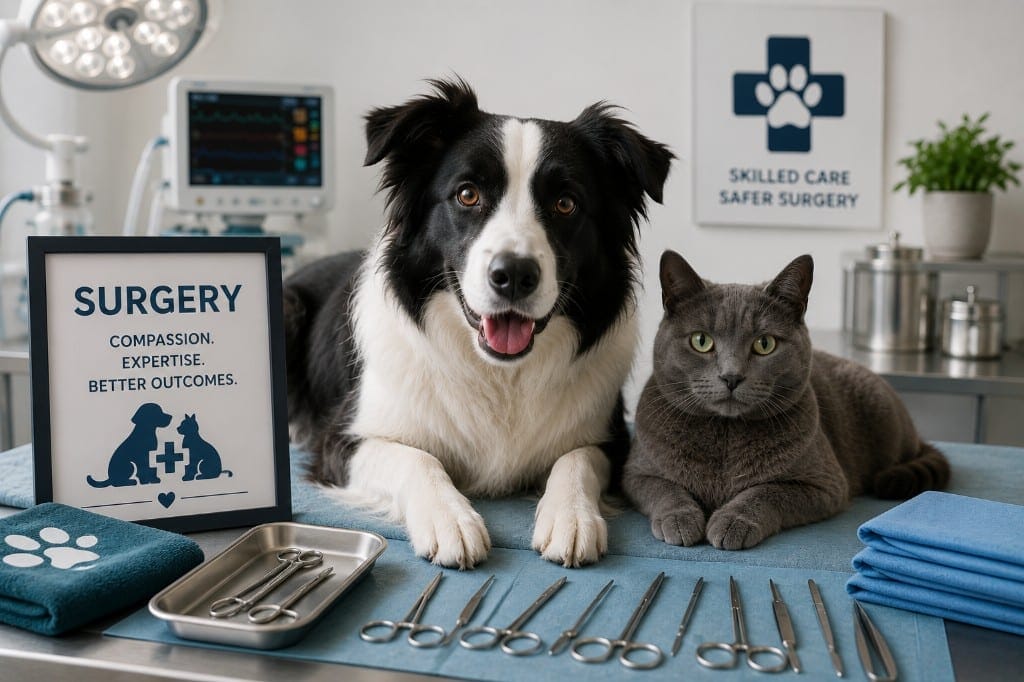
Whether it's a growth that needs removal, an injury that needs repair, or another surgical need, we'll explain your pet's specific procedure clearly before the day of surgery — what it involves, what recovery looks like, and what it costs. Appointments are required for all surgical procedures.
Who Needs This?
- Pets with a mass, lump, or growth that needs removal or biopsy
- Dogs and cats with an injury requiring surgical repair
- Pets needing a foreign object removed
- Any pet whose condition has been recommended for surgical treatment
Signs It's Time to Schedule
- A new lump, bump, or growth that's changing in size
- Limping or an injury that hasn't improved with rest
- Vomiting that won't stop, which can indicate a blockage
- A condition your veterinarian has identified as needing surgical correction
What to Expect
- 1
Pre-surgical evaluation
We assess your pet's overall health, and recommend bloodwork when appropriate, to plan safely for anesthesia and surgery.
- 2
Surgical planning
We explain exactly what the procedure involves, expected risks, and what results would mean for your pet before you decide to move forward.
- 3
The procedure
Surgery is performed with close monitoring throughout, using modern anesthesia and pain management protocols. Appointments are required for all surgical procedures.
- 4
Aftercare instructions
You'll leave with specific, written instructions for incision care, activity restriction, and medication.
Recovery & Aftercare
Recovery time depends heavily on the specific procedure — some pets are back to normal within a week, while more involved surgeries may take several weeks of restricted activity. We'll give you a recovery timeline specific to your pet's procedure and schedule any needed rechecks.
Frequently Asked Questions
How do I know if my pet actually needs surgery?
We'll always discuss non-surgical options when they're reasonable for your pet's condition. If surgery is recommended, we'll explain exactly why it's the best path forward and what happens if you wait.
Is anesthesia risky for older pets?
Age alone isn't a reason to avoid needed surgery. We evaluate each pet's individual health and adjust our anesthesia approach accordingly, including bloodwork beforehand when appropriate.
Will my pet be in pain after surgery?
We use pain management protocols during and after surgery, and send you home with medication and clear instructions to keep your pet comfortable during recovery.
How long will my pet need to wear an e-collar?
This depends on the procedure and how well your pet leaves the incision alone — we'll give you a specific timeframe at discharge.
Can I stay with my pet before surgery?
Yes, we welcome you into the exam room for the pre-surgical visit. Your pet will be cared for by our team during the procedure itself.
What Does It Cost?
Surgical costs vary widely based on the procedure, your pet's size, and anesthesia time. We'll walk through a detailed estimate with you before scheduling, so you know what to expect.